Get Closets Blog
Garage Storage Zones: Keep Everyday Gear Accessible While Parking Inside
Organize everyday gear, tools and seasonal belongings while preserving parking and access.
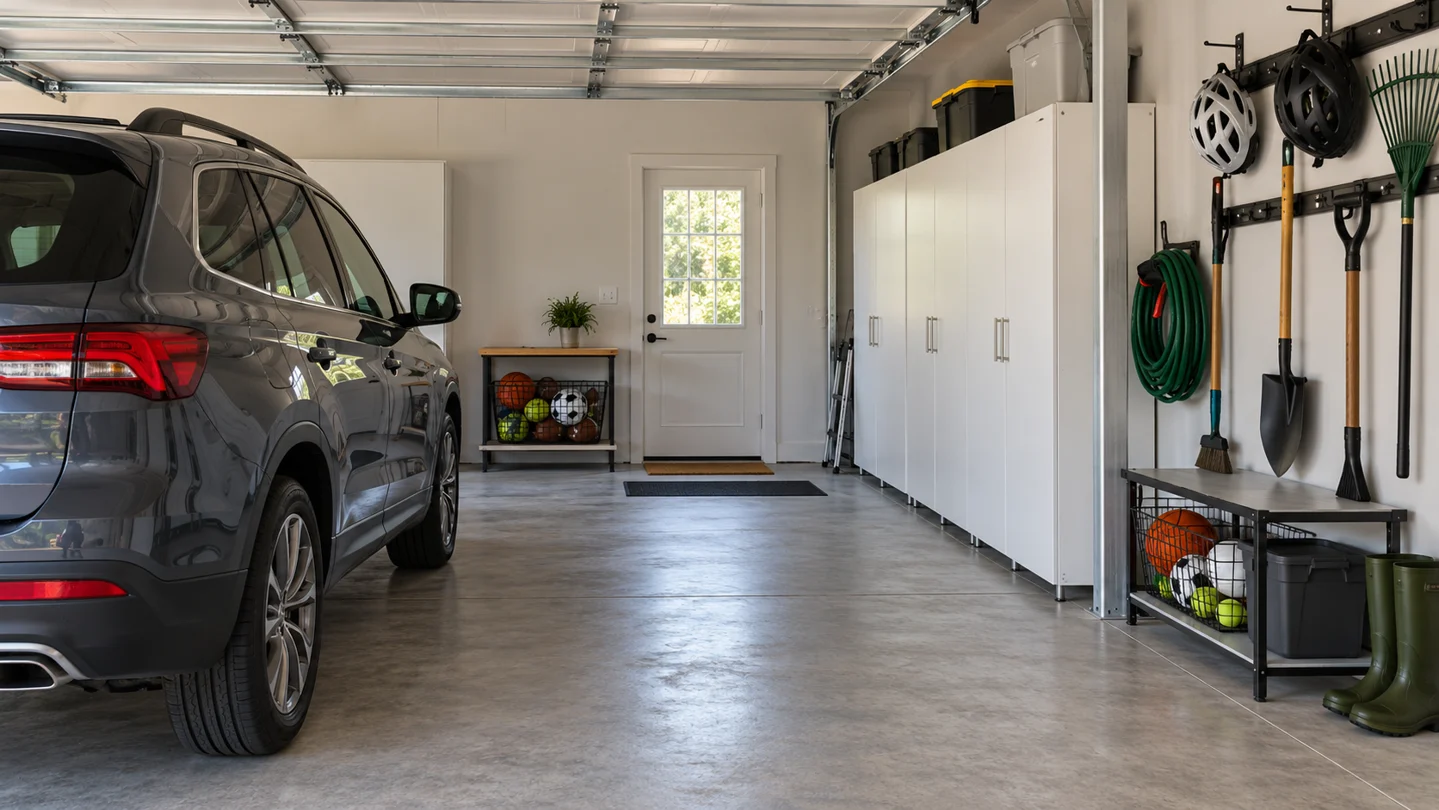
Plan zones around daily access
A garage can look organized when the car is outside and become awkward the moment it returns. The cabinet holding your everyday tools may sit behind a vehicle door. Sports bags may end up on the floor because their assigned shelf is difficult to reach. The solution starts with deciding where each activity belongs before choosing cabinets.
For homeowners planning garage storage in Charlotte and nearby communities, a useful zone is more than a labeled cabinet. It connects a group of belongings with the place and time you use them. This guide explains how to create that arrangement while preserving parking and everyday access. Exact dimensions, support methods and equipment clearances need to be reviewed for your own garage.
Map a normal day before drawing cabinet lines
Start with three routine trips: arriving home, leaving with the items you need, and retrieving something while the vehicles remain parked. Walk each route. Notice where you pause, which doors you open and what you carry in both hands. Those observations show where accessible storage matters most.
Next, list the activities your garage supports. Common examples include household overflow, sports, gardening, small repairs and seasonal storage. Give each category a rough inventory. Keep bulky objects on that list even if they will not fit inside a cabinet; otherwise, they can become the unplanned items that consume the walking space.
Prioritize the activities that happen frequently. A rarely used decoration box does not need the easiest shelf to reach. A bag carried out every morning probably does. The goal is an arrangement that is easy to maintain after the initial cleanup.
Protect parking and movement before assigning storage
Evaluate the space with your usual vehicles in their normal parked positions. Consider opening doors, reaching the trunk or liftgate, carrying groceries and walking to the house entrance. A cabinet footprint alone does not show its operating space: cabinet doors and drawers also need room to open.
Bring this information to the design visit rather than relying on an empty-garage measurement. If vehicles vary in size or share the space at different times, explain that pattern. A useful plan should account for how the garage is actually used, not only its most spacious moment.
Keep access to utilities, equipment and fixed openings visible in the plan. Required clearances depend on the equipment and applicable requirements; a generic storage diagram is not enough to establish them. Our custom garage cabinets and storage service starts with the room and intended use before proposing a layout.
Build an everyday zone near the relevant route
Choose a convenient location for items that leave the house frequently: sports bags, reusable shopping bags or household items you regularly carry to the car. This does not mean every item belongs beside the entrance. The location must still preserve door movement and a clear path.
Assign an easy return position to each item. A bag that must be unpacked before it fits into its compartment is less likely to be put away consistently. Measure the bag as you normally carry it, including handles or bulky contents, and discuss that shape during planning.
Open access can be convenient for frequently handled belongings, while closed cabinets can reduce visual clutter. Compare both against your routine. Neither approach works well if the storage is too deep, too high or hidden behind the parked vehicle when you need it.
Put tools near the work they support
If you use a work surface, organize the nearby storage around the tasks performed there. Separate small hand tools from larger equipment and supplies. The purpose is to keep the work surface available instead of using it as a permanent holding shelf.
Drawers can make smaller items easier to sort, but they need opening space and an appropriate intended load. Shelves can hold larger containers, provided the usable interior dimensions and system guidance match what you plan to store. Ask about the actual storage opening rather than relying only on the cabinet's outside dimensions.
Do not assume that a storage cabinet is suitable for every chemical, fuel or battery-related item. Follow product labels and relevant equipment instructions. Identify items that need special storage conditions before deciding what belongs in this zone. Cabinet doors alone do not establish safe storage conditions.
Give seasonal storage a deliberate retrieval plan
Seasonal belongings can occupy less convenient locations, but they still need to be retrieved safely. Group items by the occasion or activity they support. Label containers so that you do not need to open several boxes to find one item.
Review representative containers before selecting shelf spacing. Include lids, handles and the room needed to remove them. A shelf that barely accepts a bin can be frustrating when neighboring items prevent you from gripping it. Future replacement bins may also differ from the ones you own today.
Avoid treating every high shelf as suitable for heavy or awkward belongings. Discuss the intended loads and access method with the designer, and follow the installed system's guidance. If retrieving a category requires clearing the entire garage, reconsider its location or reduce the amount stored there.
Choose cabinet capacity after the categories are clear
Once you have mapped the zones, decide which categories benefit from adjustable shelves, drawers or closed storage. Start with the contents and access needs, then choose the appearance. Adding more cabinets does not solve a layout where frequently used items remain difficult to reach.
Our completed white garage cabinet wall in Spartanburg provides a real example of an installed cabinet arrangement. Use its photographs to discuss organization and appearance. They do not establish the dimensions, capacity or installation conditions appropriate for your Charlotte-area garage.
For a broader project overview, read the garage cabinet planning guide. This article focuses on assigning belongings to useful zones; that guide also covers cabinet types, site conditions and the overall design process.
Check the plan before approving it
Review the proposed layout using a short routine-based checklist:
• Can I reach everyday items with the usual vehicles parked? • Can vehicle doors, cabinet doors and drawers operate without conflict? • Does each major category have enough usable space? • Can I return bulky items without moving unrelated belongings? • Are equipment access and fixed openings preserved? • Is seasonal storage retrievable using an appropriate access method? • Are the intended loads and component limitations understood? • Are removal, preparation and installation responsibilities written down?
The final question matters when replacing existing shelves. Delivery, removal and room preparation should be clarified in the proposal. Review what custom storage installation includes before assuming that all surrounding work is included in a cabinet project.
Frequently asked questions
Should garage storage zones follow people or activities?
Start with activities for shared tools and household supplies. Individual sections may be useful for personal sports bags or frequently carried belongings. Use whichever arrangement makes the items easiest to find and return without duplicating unnecessary storage.
Should I choose cabinets before sorting my garage?
An initial inventory helps prevent buying space for items you will not keep. You do not need a perfectly organized garage before a consultation, but identifying major categories and representative bulky items makes the design discussion more useful.
Can I keep parking inside after adding cabinets?
That depends on the garage, vehicles and proposed layout. Review parked positions, door operation and walking routes before approving cabinet depth and placement. A design should demonstrate the arrangement rather than assume that storage fits around the cars.
Does every storage zone need a separate cabinet?
No. A zone can use a shelf section, a drawer group or another appropriate storage arrangement. The important distinction is a clear location for the category, with practical access and components suitable for the intended use.
Plan storage around your garage routine
Get Closets offers a free in-home consultation and complimentary 3D design for Charlotte metro service areas. Bring your activity list, vehicle needs and a few examples of difficult-to-store items. Request your consultation to discuss a garage layout that connects the cabinets with the way you use the room.